Annette LeMay Burke
Fauxliage: Disguised Cell Phone Towers of the American West
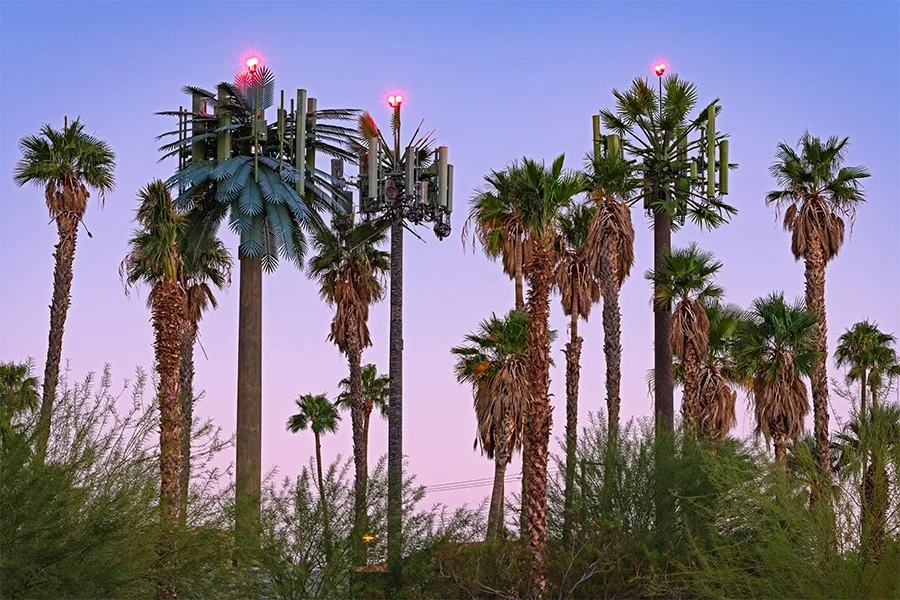
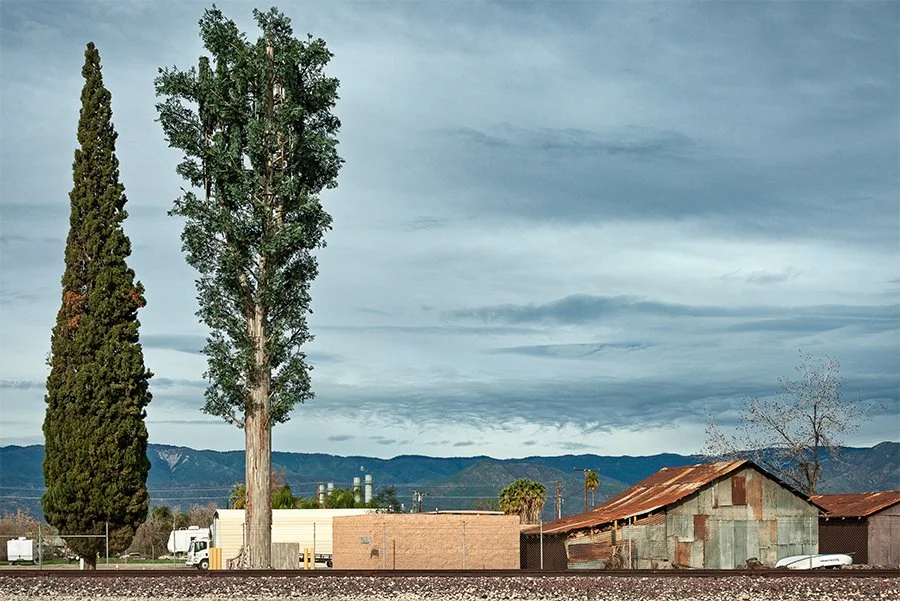
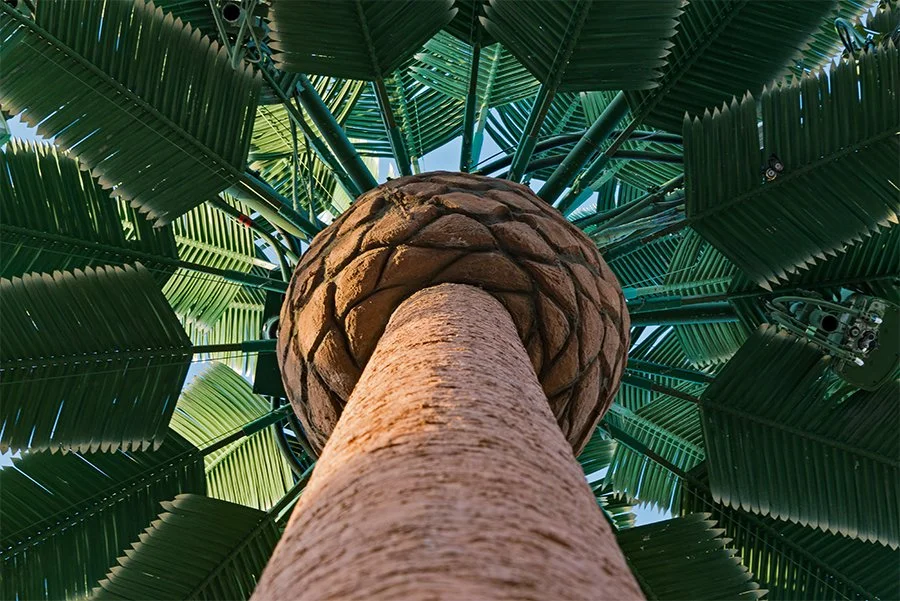
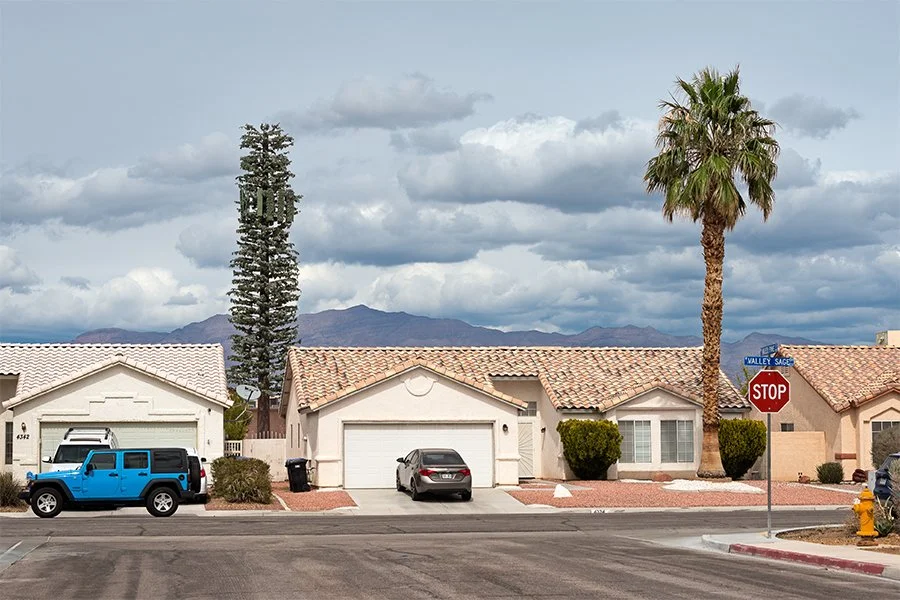
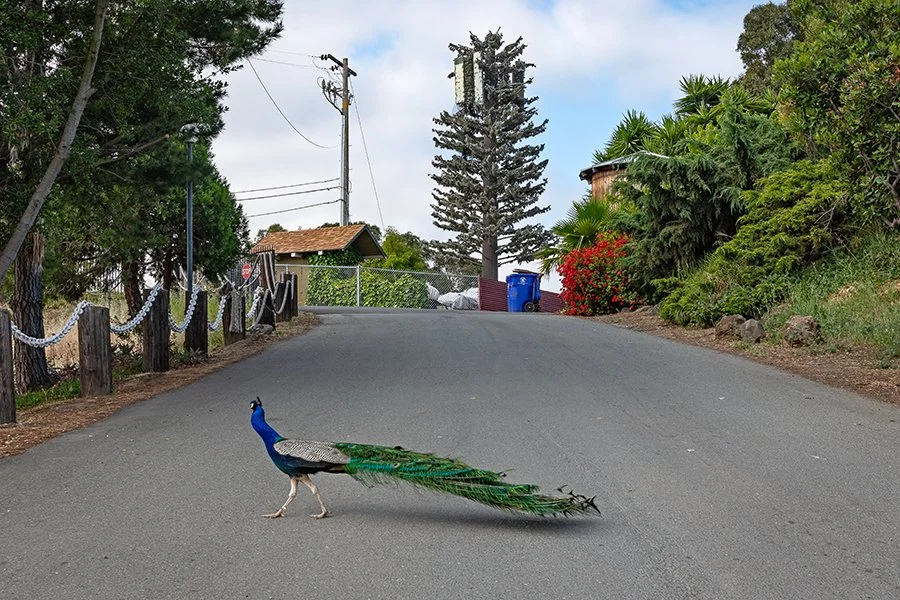
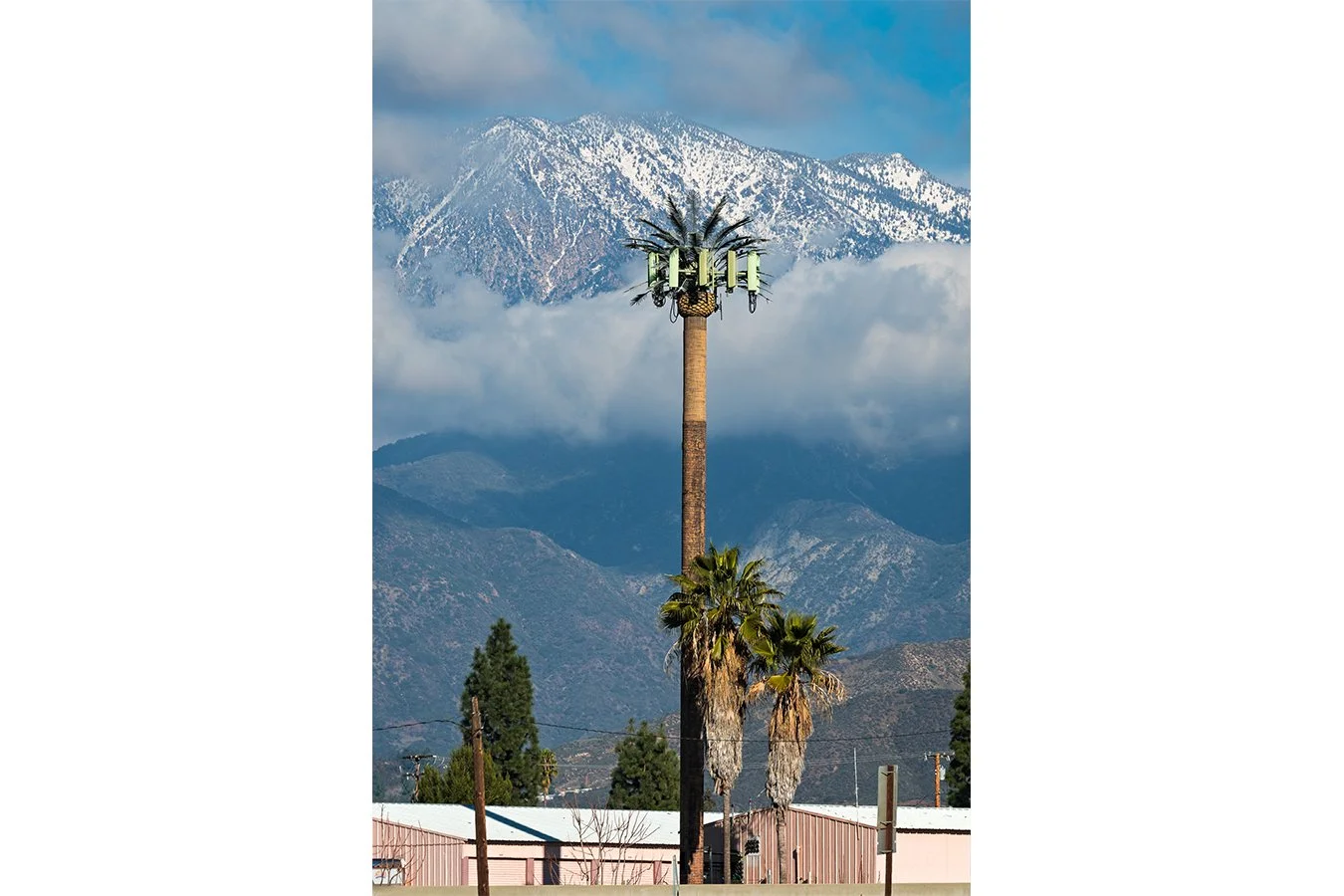
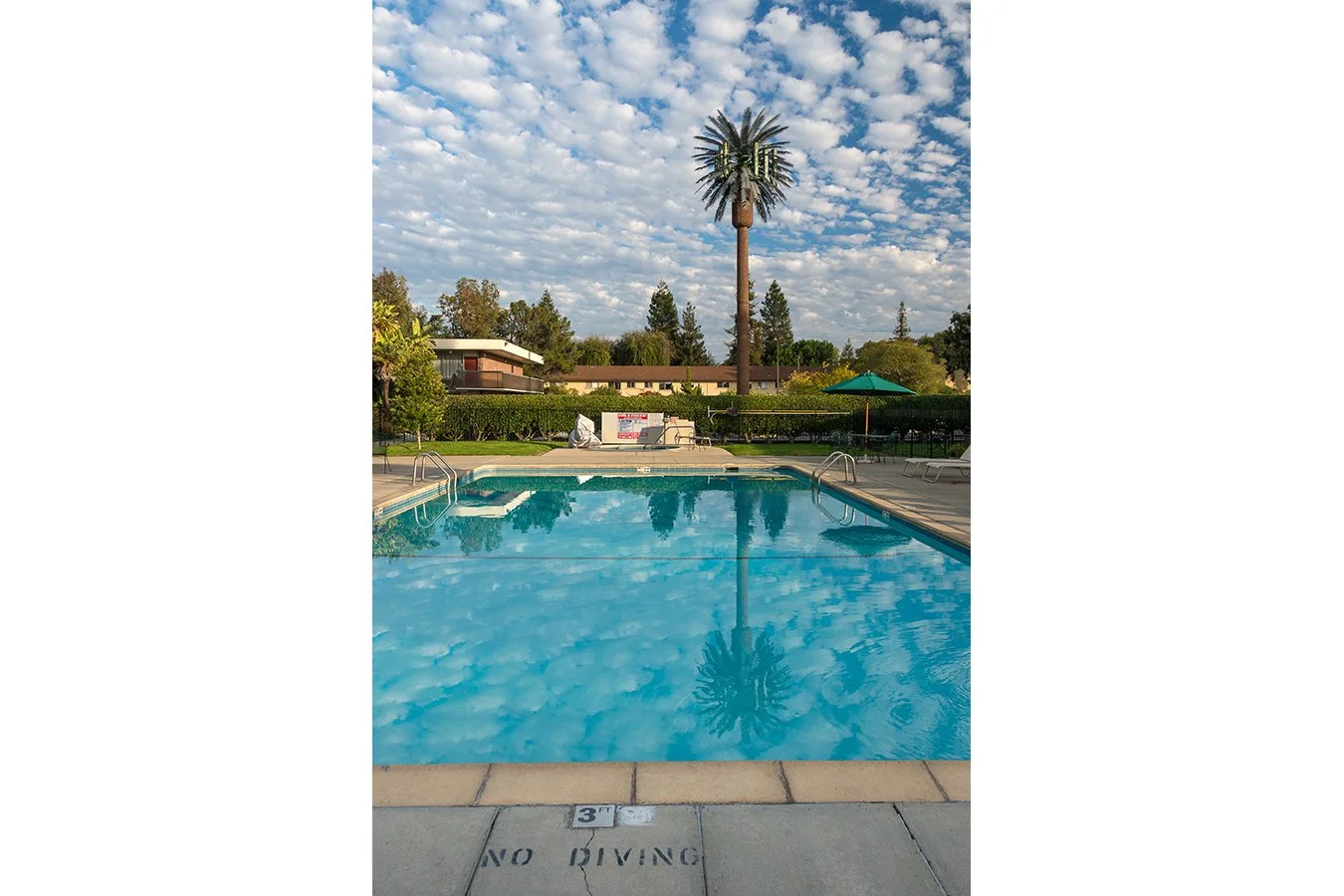
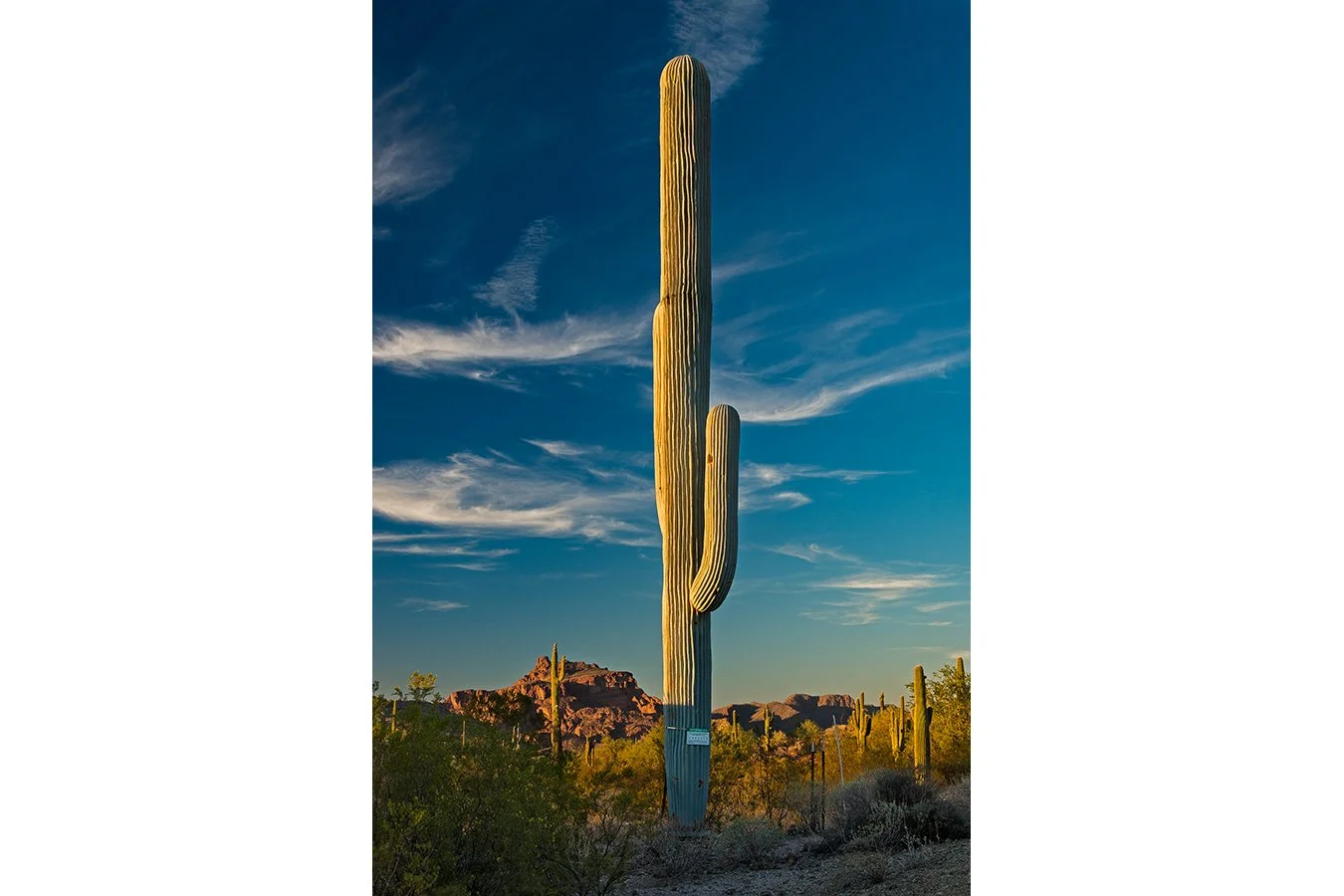
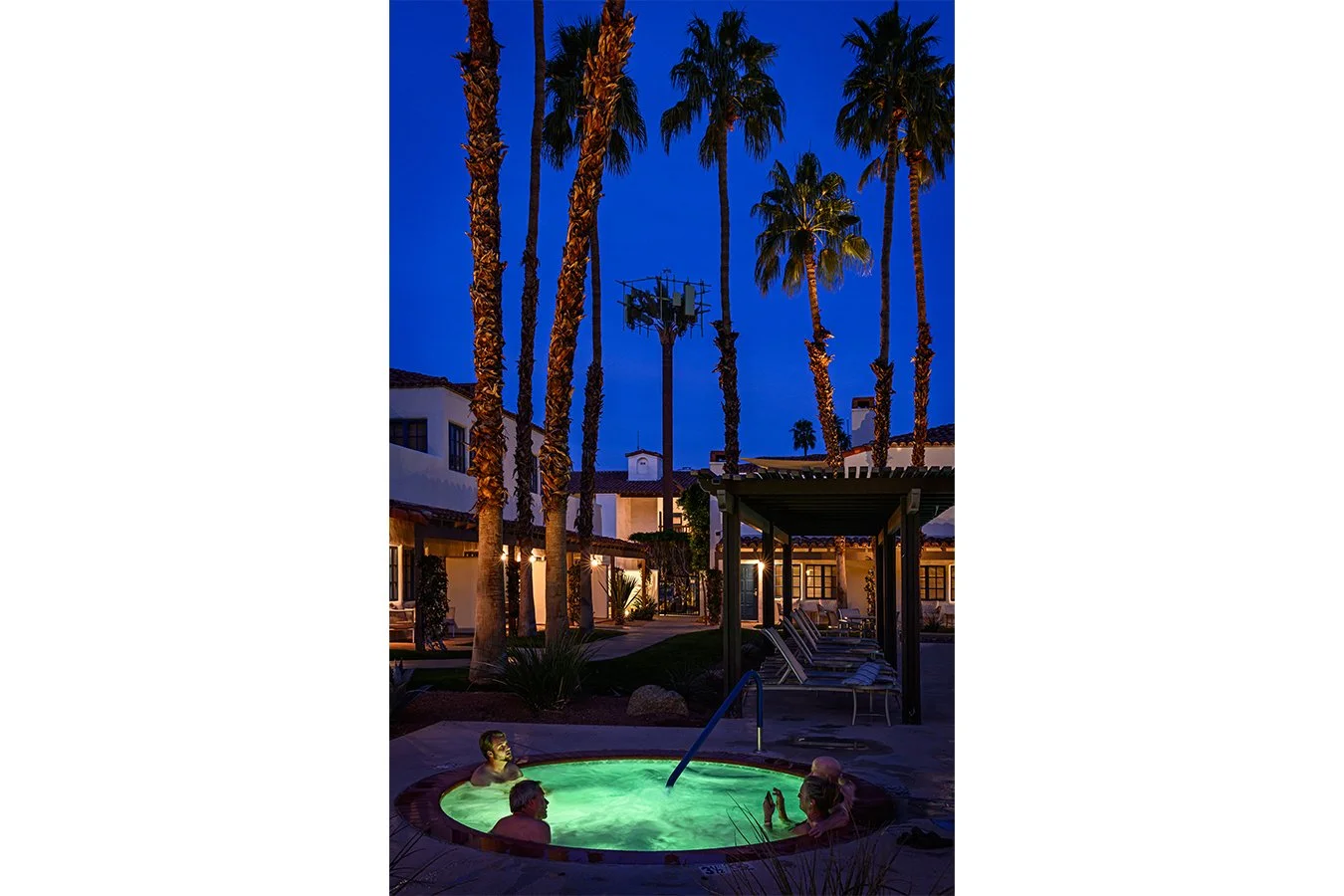
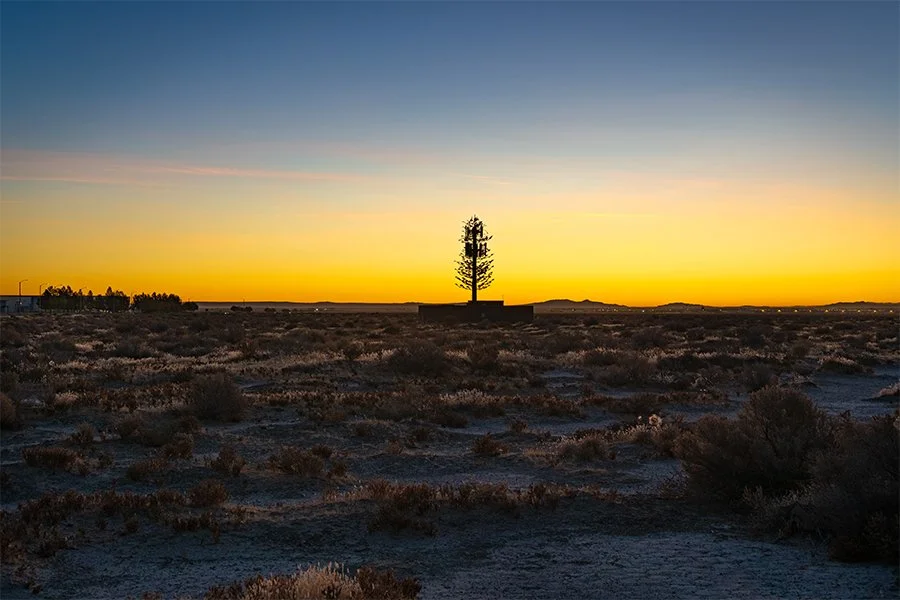
Fauxliage explores the proliferation of disguised cell phone towers across the American West. Designed to blend into the terrain, these camouflages—primarily in the form of trees—expedite installation approval from local municipalities. The result is a modern landscape adorned with a quirky mosaic of palm, conifer, eucalyptus, and saguaro simulacra.
E. O. Wilson’s concept of biophilia describes our innate affinity for nature. Are these "costumed" towers a form of technobiophilia—our tendency to find comfort in technologies that mimic or incorporate natural elements (like a mouse, virus, cloud, web, or bug)? And do these faux trees truly keep us connected to nature, or do they distort it?
Fauxliage examines technology's dual role as both disruptor and unifier within the landscape. These towers raise an essential question: How much manufactured nature and uncanny landscapes are we willing to accept for the sake of connectivity?
-
![Eucalyptus, San Bernardino, CA]()
Eucalyptus, San Bernardino, CA
-
![Looking Up, San Diego, CA]()
Looking Up, San Diego, CA
-
![Suburban Dreams, Las Vegas, NV]()
Suburban Dreams, Las Vegas, NV
-
![Superfluous Plumage, Rodeo, CA]()
Superfluous Plumage, Rodeo, CA
-
![Palm in Winter, Calimesa, CA]()
Palm in Winter, Calimesa, CA
-
![Hotel Pool, Sunnyvale, CA]()
Hotel Pool, Sunnyvale, CA
-
![Golden Hour Saguaro, Mesa, AZ]()
Golden Hour Saguaro, Mesa, AZ
-
![No Checking-out, La Quinta, CA]()
No Checking-out, La Quinta, CA
-
![High Desert Sunrise Lancaster, CA]()
High Desert Sunrise Lancaster, CA
-
![Airport Approach, Palm Springs, CA]()
Airport Approach, Palm Springs, CA
Biography
Annette LeMay Burke is an award-winning photographic artist and Northern California native based in the heart of Silicon Valley. With a background in geology from the University of California, Berkeley, Burke's lens has been finely tuned to the ever-evolving contours of the western landscape. Formerly immersed in a career in high-tech, Burke now channels her passion into her artistic practice, often exploring the presence of technology as both a disruptor and unifier within the landscape, echoing the complexities of the modern human experience. Burke’s work has been shown in more than 100 exhibitions across the globe. Her images have been featured in The New York Times, L.A. Times, The Times (UK), Hyperallergic, Sierra Club Magazine, Newsweek Japan, Boston Globe, All About Photo, Katalog Journal, Dezeen, Il Fotografo, and Australian Geographic. Her monograph, Fauxliage, was published by Daylight Books in 2021.